


It starts with steam rising into the air, a cardboard tray warming your hands. The smell hits first, salty fries, rich gravy, and then that unmistakable squeak of fresh cheese curds against your teeth. I didn’t discover poutine on a food tour. I grew up with it. It’s in our Quebec DNA. Poutine is what we eat after hockey games, on summer road trips to roadside casse-croûtes, or standing in parking lots, eating it straight from the container before it had a chance to cool after a night out with friends.
It was never meant to be fancy, but in Quebec, it’s close to sacred; we defend poutine fiercely. If you’re visiting and want to understand why this messy trio inspires so much loyalty and how to tell a truly good one from a tourist version, here’s everything you need to know about poutine before taking your first bite.
Quick Guide: If You Only Read One Paragraph About Poutine
Don’t want to read it all? I’ve gotcha! Here’s a summary of what you need to know:
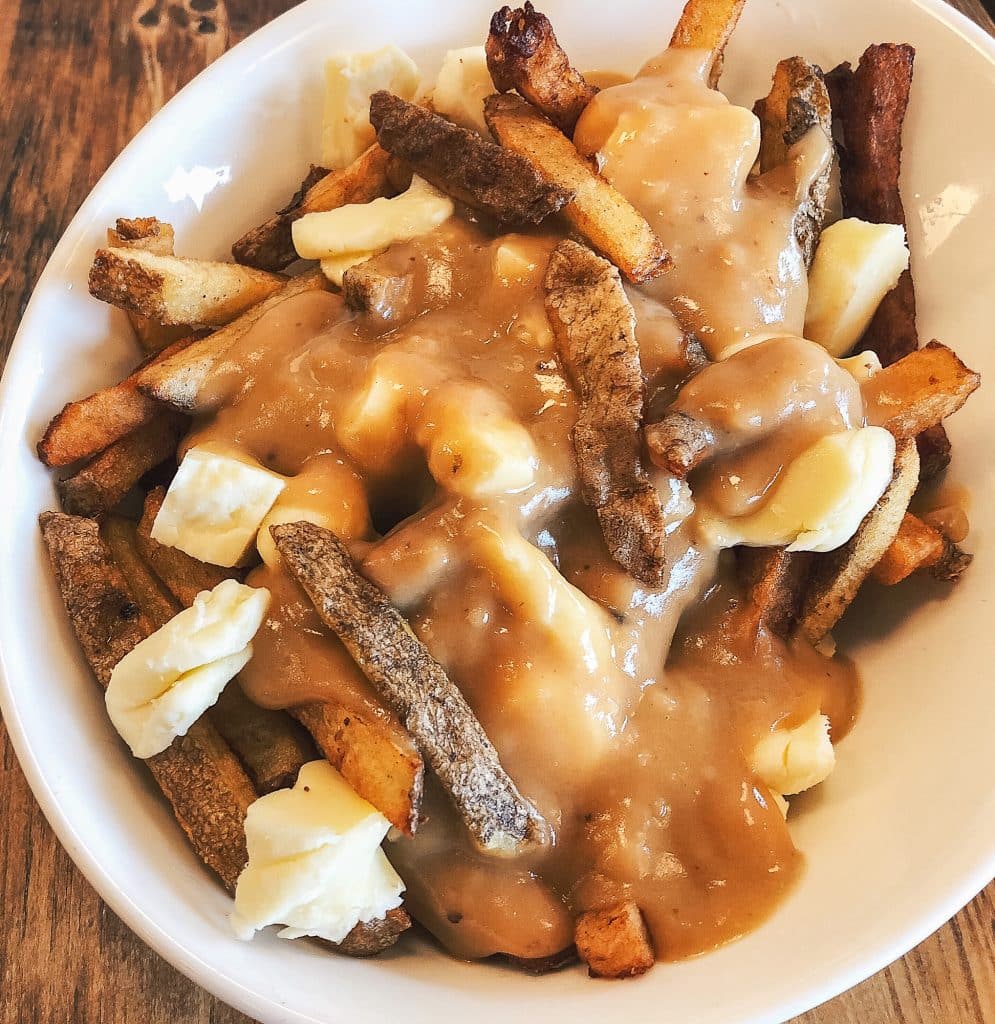
- A real classic poutine is fries + gravy + fresh cheese curds. Nothing else. (Yeah, I’m a purist, can you tell?).
- It’s pronounced poo-tsin, not poo-teen.
- You’ve got to eat it immediately.
- If the cheese doesn’t squeak, it’s not fresh.
- The best poutines are in random places and are rarely fancy.
First Off, What’s Poutine and How to Pronounce It?
Because it’s AMAZING!
OK, OK, sorry, that was the Quebecer in me. Hahah
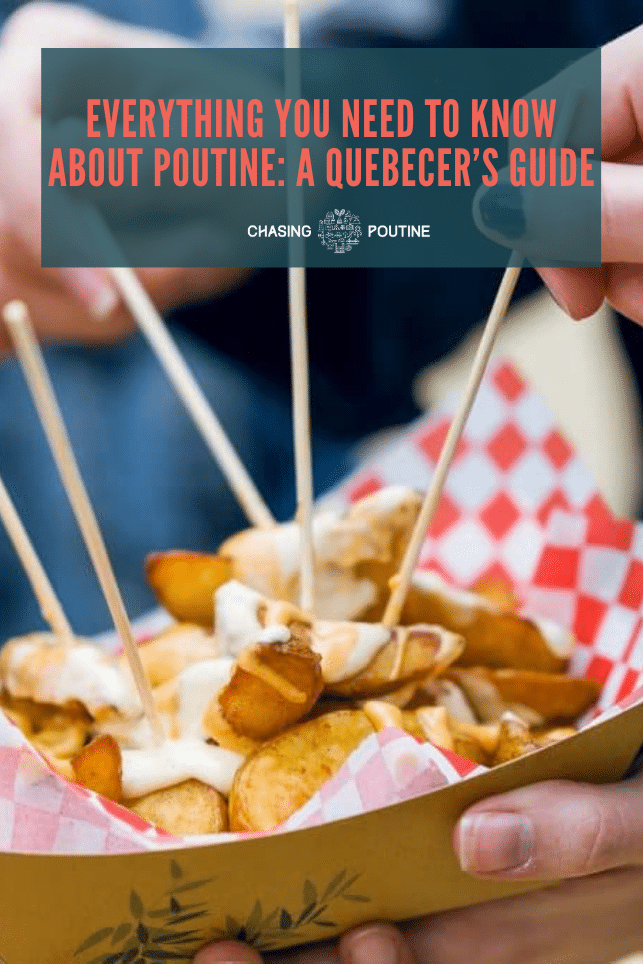
Poutine is a trio. A simple, yet infinitely intricate combination of 3 ingredients: fries, gravy, cheese curds. We all grew up with this fast food, and it’s engraved in our culture as much as in our hearts.
Most Anglophones pronounce it poo-teen, but the real way to say it is with the French accent in it: poo-tsin. Don’t worry, you’ll still get served even if you mispronounce it! 🙂

A Bit of Poutine History
If you want to get into a heated discussion, start talking about the origin of poutine. Ooh la la! If there is one thing Quebecers don’t agree on, it’s where poutine comes from and who invented it!
One thing people do agree on though is that it comes from Centre-du-Québec on the southern shore of the St. Lawrence river between Quebec City and Montreal, known for cranberries and poutine!
The contenders are Warwick and Drummondville.
The first story is that a man in Warwick asked for his fries to topped with cheese curds and the owner exclaimed that it would make quite a poutine, which would translate to quite a mess. The version with gravy that we know today was added to the menu of the Le Lutin Qui Rit in 1957.
The other origin story comes from Le Roy Jucep in Drummondville, official inventor of poutine according to the Canadian Intellectual Property Office. Clients started adding curd cheese over the gravy+fries item on the menu, before this famous trio got officially added too!
Discover what to do in Centre-du-Québec while your there in this complete regional guide!
When Do Quebecers Eat Poutine?
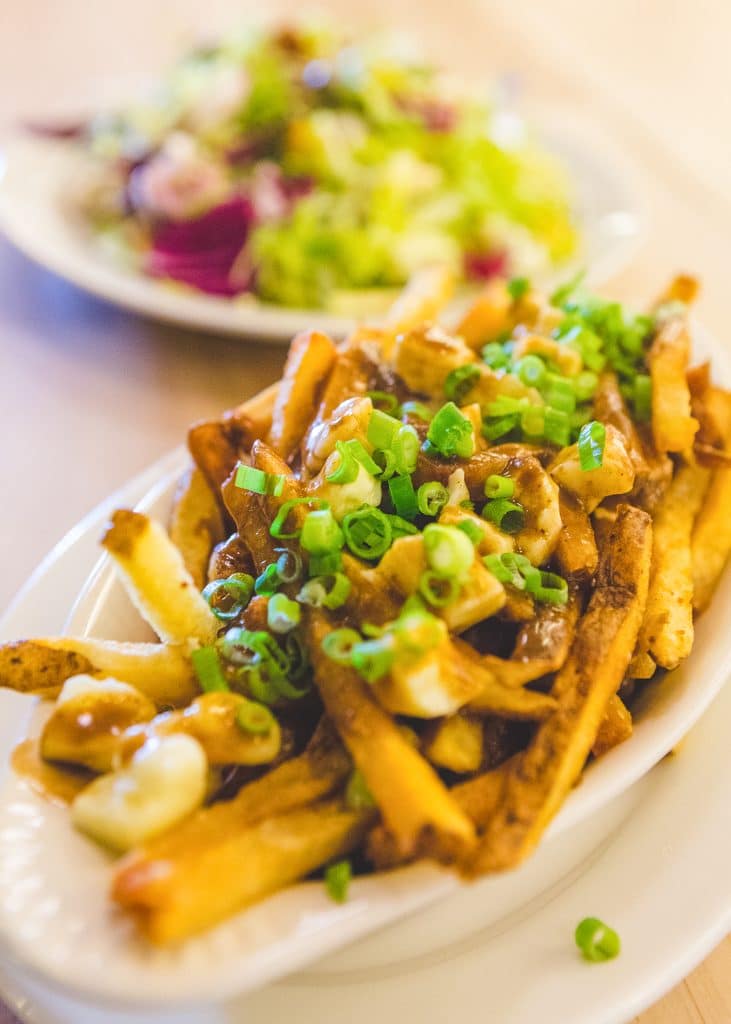
It’s simply a go-to comfort food! It can be a snack if you share it, or a complete hearty meal for lunch or dinner.
Poutine can also be perfect drunken food. We’ve all ended late nights out with a good poutine, had it from various food trucks or even at the arena while watching our family hockey games.
It’s definitely not a fancy dinner dish, although some versions of it can be elevated in certain gourmet contexts, but the real deal is always the best!
There’s nothing like a greasy poutine on a Quebec road trip!
The Types of Poutines
The base of poutine is gravy, fries and fresh curd cheese, but there are different types of poutines.
The most common is the pure, classic, traditional poutine with only those 3 ingredients.
But you’ll also see regional variations, like galvaude (peas and chicken) or Italian (spaghetti sauce) and very often with smoked meat, another Quebec staple.
Some brunch restaurants serve breakfast poutine with a different type of gravy while fancier restaurants and pubs go for duck confit, foie gras or braised beef poutine variations.
Although I admitted being a purist, I do love a seafood poutine with cream sauce. It’s common in the maritime Magdalen Islands, Gaspésie, Côte-Nord or Bas-Saint-Laurent regions.

How to Eat Poutine: Important Foodie Etiquette
Here are some local tips to make your poutine experience a real Quebecois one!
- Eat it immediately (poutine doesn’t age well)
- Don’t mix it aggressively. Choose a bit of each of the 3 ingredients with each forkful.
- Ordering poutine takeaway is risky, as it gets soggy.
- That’s also why delivery is rarely ideal.
- This is genuinely missing in most guides online.
- Don’t ask for ketchup on classic poutine (some would say it’s a controversial move, but when you think about it, just do whatever you want if you love it!).
- Asking for sauce on the side is unusual, although asking for extra curd cheese is not rare.
- Sharing is common.
- Large sizes are very large, so unless you have a huge appetite, you’ll be happy with a regular poutine.
Warning Signs of a Tourist Trap Poutine
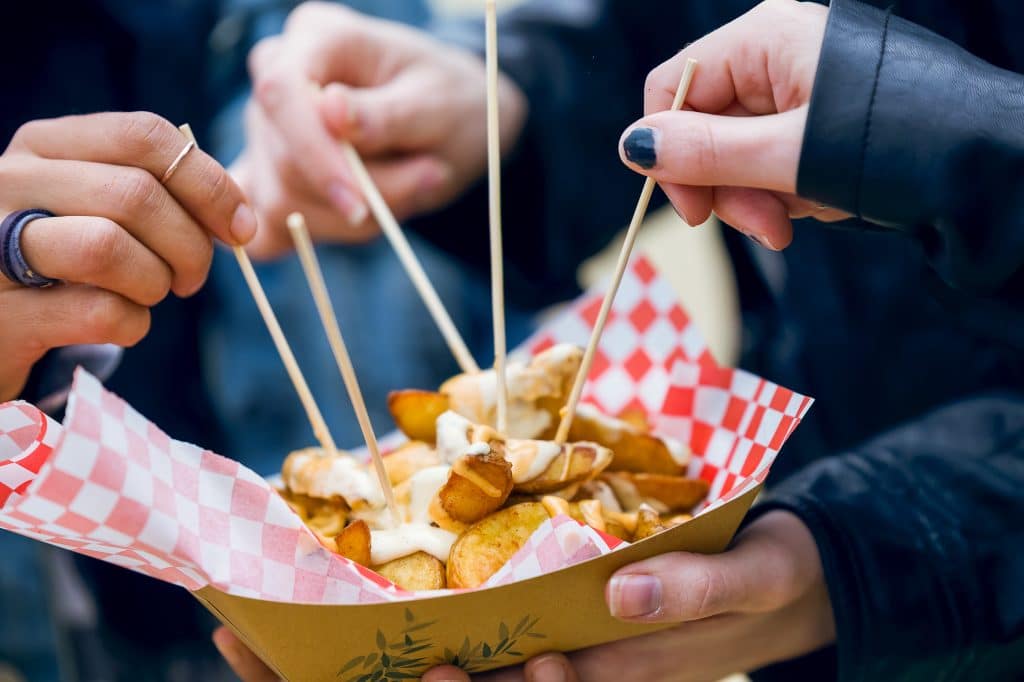
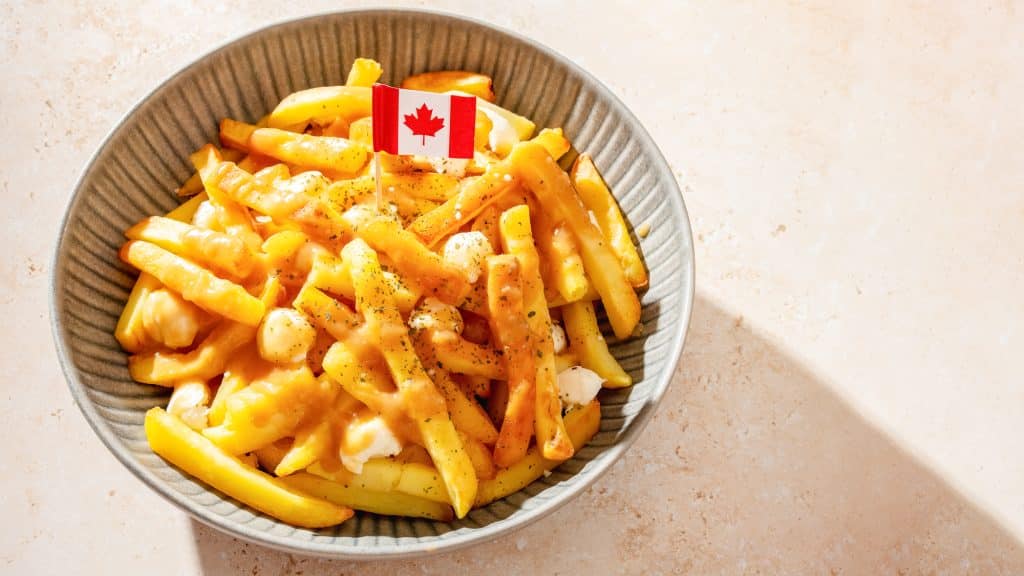
I don’t care how cute the place is, if I see shredded mozzarella, I’m already skeptical. Classic poutine uses fresh cheese curds. Always. If the cheese looks like it belongs on a pizza, you’re not getting the real thing.
Next: pale, limp fries. A proper poutine starts with golden, crispy fries that can actually hold up under hot gravy. If they’re soggy before the sauce even hits or just as it does, it’s a lost cause.
Then there’s the gravy. If it tastes overly salty, flat, or suspiciously uniform, like it came from a packet, it probably did. Good gravy should be savoury and rich.
And the cheese? It should soften slightly from the heat, not melt into stretchy, gooey glue. If everything is fused together like a casserole after it’s served, something’s wrong.
Finally, if it’s served in a delicate bowl topped with microgreens for “aesthetic” and it’s not clearly an intentional elevated chef version, you’re likely paying for presentation, not quality. The best poutines rarely try that hard!
10-Second Quality Test
Here’s a 10-second test to weed out those warning signs:
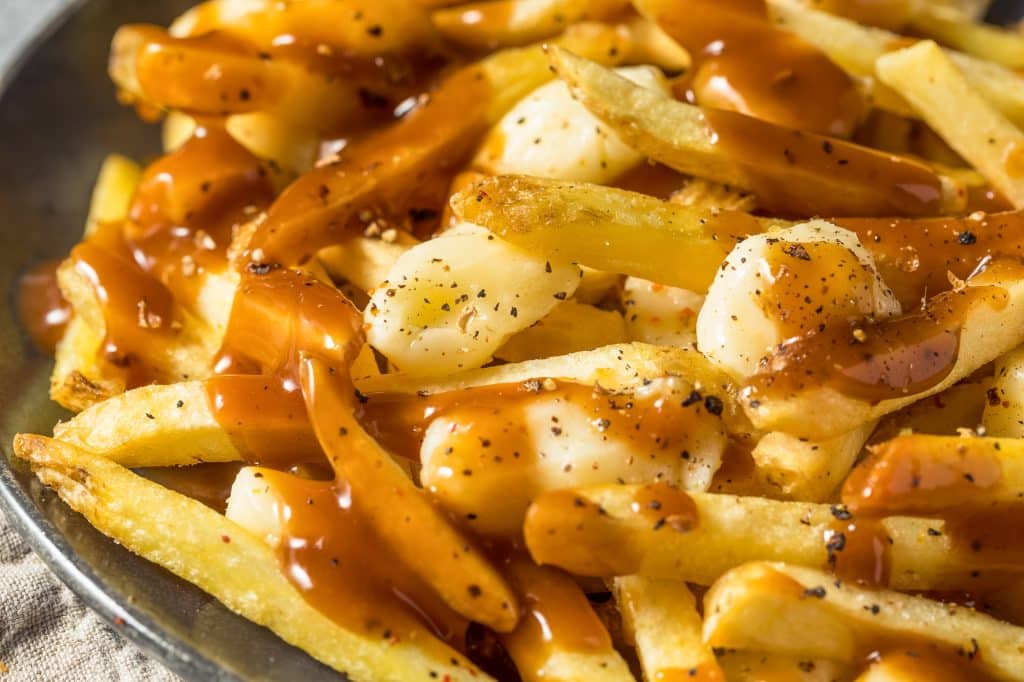
When your poutine lands in front of you, you can tell almost immediately what you’re dealing with. First: look for steam. A proper poutine should arrive hot. Then check the fries. Do they still look golden and structured, or have they already collapsed into a soggy pile?
Next, look at the curds. They should be intact and distinct, not dissolved into the sauce. The gravy should be glossy and silky, coating the fries rather than drowning them. And finally, take a bite. Listen for that squeak. If you don’t hear it, those curds aren’t fresh and that tells you everything you need to know.
The Anatomy of a Perfect Poutine
A great poutine isn’t accidental. It’s timing, temperature, and assembly working together in a very small window. Timing is everything: fries out of the fryer, curds at the right temperature, gravy hot enough to soften but not destroy. Ingredient balance matters. Speed of service matters. Cheese freshness logistics matter more than most people realize. When one element is off, the whole thing falls apart. When everything lines up, it’s magic.

Base Layer: Golden, Crispy Fries
The foundation must be strong. If the fries fail, the poutine fails.
They should be hand-cut potatoes, thick enough to stay fluffy inside but not so thick they’re undercooked. Ideally, they’re double-fried: first to cook through, second to crisp the exterior. The oil in the fryer should be clean and hot enough to create that golden crust, not greasy or limp.
You want contrast: crisp outside, soft interior.
Middle Layer: Squeaky Curd Cheese
This is where tourists often get fooled. Real poutine uses fresh cheese curds. They should be at room temperature, never straight from the fridge. Fresh curds delivered the same day from the dairy don’t even need refrigeration. That’s when they squeak the most. The squeak is friction against your teeth, and it fades after 24–48 hours as the curds lose freshness. That’s why curds outside Quebec often don’t squeak: they’ve been refrigerated and transported too long.
They should be layered throughout the fries, not just dumped on top. There needs to be enough cheese, so you still find curds at the bottom of the tray. And when the gravy hits, they should soften slightly, not melt into stretchy goo, not dissolve into the sauce. Softened edges, intact centres. That’s the sweet spot.

Top Layer: Warm, Savoury Gravy
The gravy is the glue, but it should never drown the dish. You want enough to coat every fry, not turn the whole thing into soup.
It must be hot and poured quickly after frying so everything works together. The texture should be glossy and smooth, never thick sludge, never watery, never lumpy.
Classic poutine uses a brown gravy, but that can mean beef-based, chicken-based, or even vegetarian. Some sauces are darker and richer, others lighter and slightly peppery. The key isn’t the exact recipe, it’s balance. Savoury, comforting, and cohesive without overpowering the fries or cheese.
What Tourists Get Wrong About Poutine?
- Thinking it’s just “Canadian fast food.” It’s Quebec comfort food with history, pride, and very specific standards.
- Comparing it to chili cheese fries. Different cheese. Different sauce. Different texture. Completely different identity.
- Expecting it to be light. It’s indulgent. It’s rich.
- Assuming it’s only drunk food. Yes, it shows up late at night, but it’s also road trip food, winter comfort food, post-hockey food, everyday snack-bar food, any time, any day.
Read also: What People Get Wrong About Quebec Travel
Is Poutine Healthy?
I won’t pretend it’s a salad.
Poutine is indulgent, not calorie conscious. It’s rich, salty, filling, and absolutely not something most Quebecers eat every single day.
Healthy? Not particularly. Worth it? When it’s done properly — absolutely.
Where to Have Poutine?
If you’re looking for specific recommendations, I’ve created detailed on where to have poutine in Montreal and where to ingest this tasty dish in Quebec City.
Of course, there are all kinds of other places that you can have poutine, as its available across the province in greasy spoons, restaurants and fast-food joints all around.
Generally, you will find out in these typical places:
- Roadside casse-croûtes
- Independent snack bars
- Microbrewery pubs
- Diners
- Fast food chains
I’ve got some more guides coming soon too! Stay tuned or send me a line if you’re going somewhere specific for some suggestions.


Frequently Asked Questions (FAQ) About Poutine
Here is everything you wanted to know and a recap of this guide at the same time:
Poutine is Québécois. It was created in Quebec and is deeply tied to Quebec culture. While it’s now recognized across Canada (and beyond), its roots, identity, and standards are firmly Quebecois.
Yes, but it’s not always the same experience. The biggest difference is cheese freshness. In Quebec, fresh curds are produced and delivered quickly, often the same day. Outside the province, curds are usually refrigerated and transported longer distances, which affects texture and squeak. You can find good versions elsewhere, but Quebec is still the benchmark.
Sometimes. The fries and cheese curds are vegetarian, but traditional gravy is often made with beef or chicken stock. Many places now offer vegetarian gravy; you just have to ask.
Fresh cheese curds squeak because of their structure. The sound comes from friction against your teeth when the curds are very fresh. The squeak fades after 24–48 hours as the curds lose moisture and elasticity.
You can, but it won’t be the same. Please don’t. Fries lose their crispness, and the texture balance disappears. Poutine is meant to be eaten immediately. It doesn’t age well.
Not usually. Traditional gravy often contains flour as a thickener. Some places offer gluten-free gravy, but you should always ask.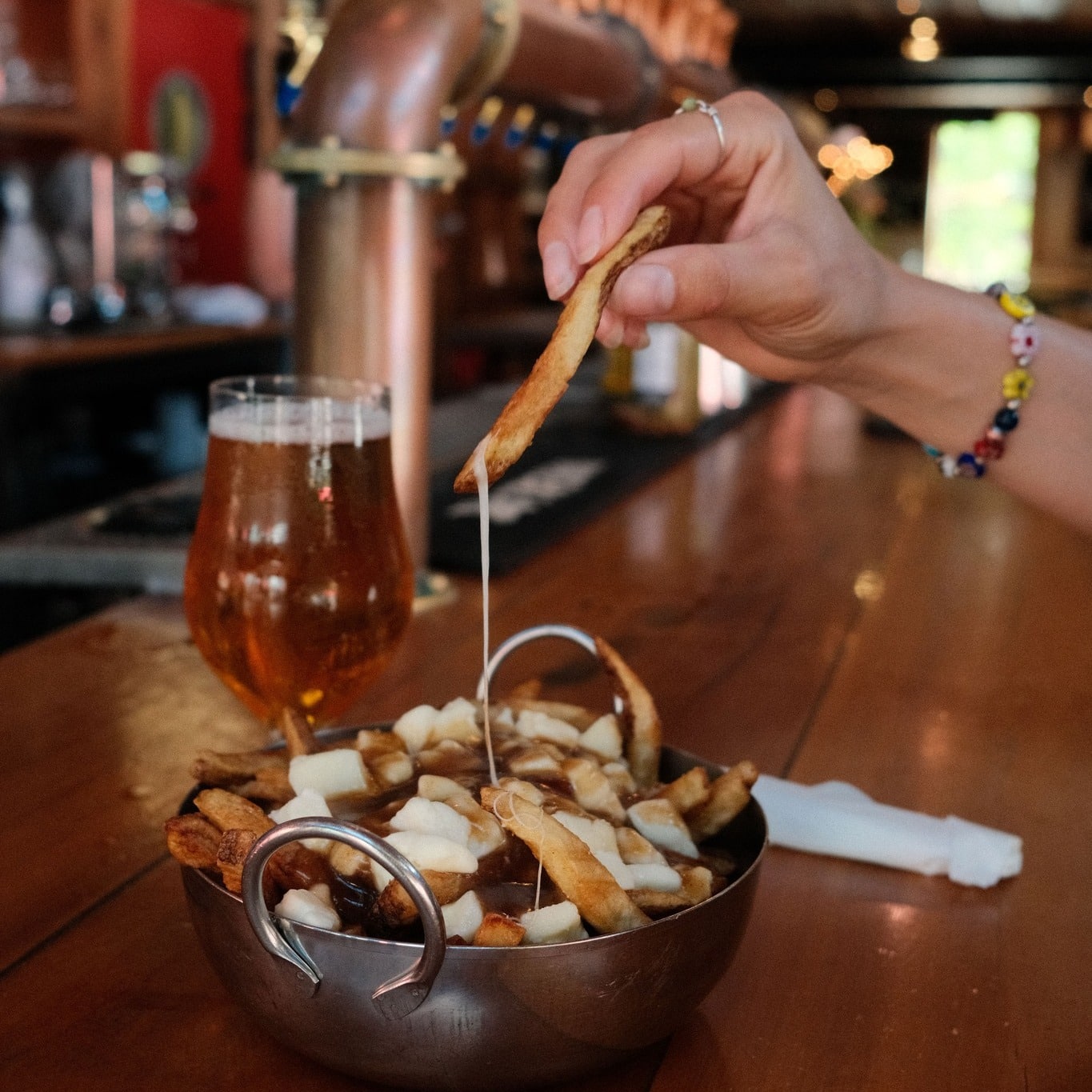
Not exactly. You can find good poutine in Toronto and other cities, but it’s harder to replicate Quebec’s freshness advantage. The supply chain of cheese curds is shorter in Quebec, which means fresher curds and better texture. Also, fast-food chain versions, which many people try first outside Quebec, don’t define what a proper poutine tastes like.
Of course. It’s fries, cheese, and gravy; very kid-friendly. Just expect it to be filling.
Because it’s not supposed to. Fresh cheese curds should soften from the heat of the gravy, but they should still hold their shape. If the cheese fully melts into stretchy strings, it’s not traditional curds.
Cold beer is the classic pairing, especially a crisp lager. Soft drinks work too. The key is something refreshing to balance the richness.
You can, but the hardest part is sourcing fresh cheese curds. If you can find same-day curds and fry your potatoes properly, you’ll get close. The timing and temperature balance are what make or break it.
If you’re visiting Quebec, try it once. Try it properly. Eat it immediately. Listen for the squeak.
And then you’ll understand why we defend it so fiercely.
So, keep on chasing poutine!
Here are some other articles that will help you plan your trip to Quebec:
- Best Poutine in Montreal: My 15 Favourite Restaurants and Festivals
- Where to Eat the Best Poutine in Quebec City?
- Visiting Quebec Without Speaking French: What to Expect
- Montreal vs Quebec City: Which Should You Visit?
- What People Get Wrong About Quebec Travel
- Why Quebec Is the Best Food Destination in Canada
Want Some Other Foodie Tour Recommendations?
Montreal is such a perfect foodie city! Here are some food tours that I can recommend with my eyes closed and know you’ll have an amazing time with fun, knowledgeable guides.
Old Montreal Food and Drink Tour to not only see the historical part of town but learn about how food influences travel and where to catch the best bites in the old part of Montreal.
Mile-End Foodie Walking Tour with 7 Tastings, all the classics you need to try when you’re in Montreal, from poutine to bagels to other tasty surprises too!
Jean-Talon Market Hidden Gems Guided Food Tour in the Villeray neighbourhood where I spent 10 years of my life. The market is a Montreal must-see and it’s even better if you have someone explaining things to you!
No Diet Club: Walking food Tour with many tastings in the Mile-End neighbourhood that is known for its Jewish influences but also its hip and trendy stops.
Maple syrup tasting and conference in residential Hochelaga-Maisonneuve, a part of town off the beaten path that you will love. Domaine des 15 lots will explain all there is to know about maple syrup! If this interests you, check out this article about maple syrup farms!
Beyond the Bagel Jewish Food Walking Tour is guided by the Museum of Jewish Montreal and will show you a side of the city that people know about (bagels and smoked meat) but incorporate all kinds of interesting cultural facts from our Jewish community.
Are you on Pinterest?


No Comments